
Powered By



For more than 50 years, radical mastectomy was the main type of surgery that doctors performed to treat breast cancer. Today, this breast cancer surgery is used less commonly, but your care team may still recommend it in certain situations.
Keep reading to learn what this surgery entails, how it differs from other mastectomies, and what recovery is like.
A radical mastectomy is a surgical procedure that may be used to treat breast cancer.
During this surgery, the breast surgeon removes:
This surgery was first performed in the late 1800s, and it was very effective in preventing breast cancer recurrence. For that reason, more than 90 percent of people in the U.S. with breast cancer received a radical mastectomy until the 1970s.
In 1972, the modified radical mastectomy, which leaves the chest muscles in place, was introduced. It began to replace the original radical mastectomy in many cases. The modified procedure had similar effectiveness rates, with fewer complications.
Today, radical mastectomies may still be performed, but they’re uncommon. Your oncology team may recommend this procedure if chemotherapy didn’t shrink your breast tumor and the tumor has invaded your chest muscles.
Your doctor will share all of your treatment options so you can decide whether a radical mastectomy is right for you.
During a modified radical mastectomy, the surgeon removes:
By leaving the chest wall muscles in place, this procedure may lead to less pain and fewer mobility problems than a radical mastectomy would.
Another procedure your surgeon may discuss is a simple mastectomy. It’s also called a total mastectomy. During this procedure, the surgeon typically removes:
In some cases, a plastic surgeon will perform breast reconstruction surgery right after the mastectomy. For this type of immediate reconstruction, the breast skin may be left in place during the mastectomy. This type of mastectomy may also be called a skin-sparing mastectomy.
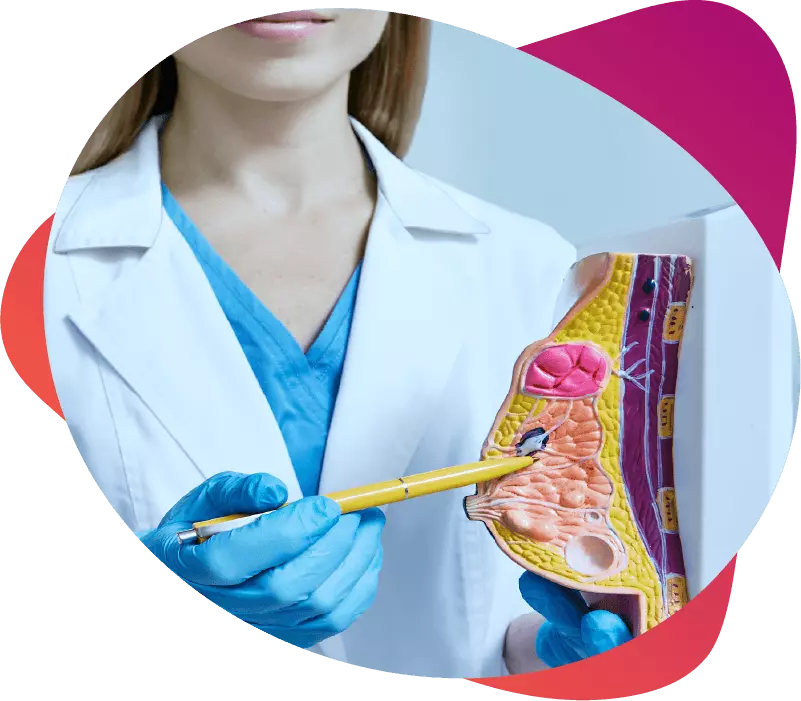 If the nipple is left in place during a simple mastectomy, it’s referred to as a nipple-sparing mastectomy.
Lymph nodes are not always removed during a simple mastectomy, but your surgeon may do a separate lymph node procedure (like a sentinel lymph node biopsy) if needed.
Before your radical mastectomy procedure, it’s a good idea to plan ahead for recovery. That way, you’ll be well prepared when you get home afterward.
You won’t be able to lift your arms or carry anything heavy after your surgery. For that reason, many people find it hard to cook and clean their homes.
It might be helpful to arrange for someone to help with housework and to prepare meals ahead of time that you can reheat once you’re home. Move items you’ll need after surgery to lower shelves so you won’t have to reach for them.
It can also help to buy some mastectomy comfort items that you’ll be able to use after your surgery. Many people find that mastectomy pillows, a mastectomy bra, slip-on shoes, and button-up shirts help.
You may not be able to drive after surgery. Plan ahead for rides to your follow-up appointments. Plus, it helps to make arrangements for children who need to be driven to school or other activities.
Ask your care team what you should expect during your radical mastectomy procedure. In most cases, a mastectomy surgery takes between one and three hours. You’ll be asleep, under general anesthesia, during the surgery.
If you’re getting breast reconstruction after surgery, the procedure may take more than twice as long. The amount of time you’re in the operating room will depend on the type of reconstruction performed.
During your surgery, the doctor will insert one or two surgical drains in the space where your breast was located. Because your entire breast was removed, your body will initially fill the empty space with fluid. The purpose of the drains is to remove that fluid until the amount is small enough for your body to reabsorb (about 10 to 15 days).
Before your hospital stay ends, someone on your cancer care team will explain how to empty your drains once you’re home. They’ll also share advice on wound care, dressing changes, and any arm exercises you should perform.
Most people go home from the hospital within a day after the mastectomy. Some tissue flap reconstruction procedures require a longer stay of up to five days. In certain cases, you may be able to leave the hospital the same day as the surgery.
“Radical mastectomy yesterday afternoon with full node removal,” one MyBCTeam member said. “Got sprung from the hospital four hours later (I wanted out!). I think I was their first ‘drive-through’ mastectomy! Doing fine, and pain is manageable.”
Recovering from a mastectomy may take several weeks or even a few months. Recovery time is different for everyone, and your doctor will explain what to expect.
Many people return to work after a mastectomy in three to six weeks. But your timeline will depend on whether your job requires a lot of physical exertion, how much pain you’re in, and other factors.
Your surgical drains will still be in place when you leave the hospital. Most people don’t have them removed for two or three weeks after their mastectomy. The exact length of time will depend on how long it takes your body to reduce the amount of fluid to a quantity that can be reabsorbed (approximately 25 milliliters).
You’ll need to support the drains so they don’t cause discomfort once you’re home. Your doctor may recommend a specific drain camisole, belt, or shirt that holds the drains in place. If not, ask them for suggestions on what to use.
Many surgeons remove drains once the output stays low for a couple of days. For example, some use a cutoff of around 20 to 50 milliliters in 24 hours, but the exact number can vary. Your surgeon will tell you the drainage goal they use and when your drains can come out.
After your radical mastectomy, you’ll likely have issues moving the arm on the side of your body where the breast and lymph nodes were removed. Because the pectoral muscle is gone, you may have pain when you try to move your arm. In addition, your arm might not have the same range of motion it did in the past.
Depending on which lymph nodes the surgeon removed, you might also have challenges moving your shoulder on the affected side of your body.
Your doctor may refer you to a physical therapist to improve your ability to move your arm and shoulder. If you need help learning how to do certain tasks, like reaching for items on high shelves or washing your hair, an occupational therapist might be able to help.
After a radical mastectomy, you may have pain in your chest, shoulder, and arm. There might also be areas of numbness across your chest or in other areas, depending on which lymph nodes were removed.
Your surgeon will advise you on the best methods of pain control to use. Always take your pain medications as your doctor advises. If the medications aren’t helping, reach out to your surgeon to ask about other pain management options.

Your care team will schedule you for several follow-up appointments after your radical mastectomy. Be sure to attend all of them so you can avoid complications like lymphedema (swelling in the arm where lymph nodes were removed), necrosis of the wound (dead tissue), or surgical site infections.
Contact your healthcare team right away if you have any of these symptoms:
These symptoms could be signs of infection or other complications. Let your care team know as soon as possible.
On MyBCTeam, people share their experiences with breast cancer, get advice, and find support from others who understand.
Did your healthcare provider suggest a radical mastectomy as part of your breast cancer treatment plan? Let others know in the comments below.
Get updates directly to your inbox.




 Continue with Facebook
Continue with Email
Continue with Facebook
Continue with Email
Continue with Facebook
Continue with Email
Continue with Facebook
Continue with Email
Become a member to get even more





 Join
Join




 Your Privacy Choices

This is a member-feature!
Sign up for free to view article comments.
We'd love to hear from you! Please share your name and email to post and read comments.
You'll also get the latest articles directly to your inbox.