
Powered By



A mammogram is a scan that checks for early signs of breast cancer. Screening recommendations depend on your age, breast anatomy, and risk factors.
Mammograms work just as well on small breasts as they do on large breasts, and they are just as necessary.
The U.S. Preventive Services Task Force recommends that all women between ages 40 and 74 get screened for breast cancer with a mammogram every other year.
Read on to discover what people with small breasts can expect during a mammogram.
 Can You Get a Mammogram With Small Breasts?
A breast cancer screening mammogram can be done on breasts of any size. Both 2D mammograms and 3D mammograms work for small breasts.
A mammogram uses low-dose X-rays to identify abnormal breast tissue. Although small breasts contain less breast tissue to image, the technology works the same way for all breast sizes.
During a screening mammogram, a technician will compress and then X-ray your breast tissue. The procedure results in a detailed image of your breast tissue, which is then studied for abnormalities. Mammograms detect abnormalities and raise red flags if any of those abnormalities require further evaluation, but they don’t diagnose any disease.
An abnormality doesn’t mean you definitely have breast cancer. Instead, it identifies a need for further testing, like a biopsy, to determine whether the cells in the tissue are cancerous.
For people of all breast sizes, mammograms save lives. Breast cancer is the second most common cancer among women, representing 15 percent of all new cancer diagnoses in the U.S. each year.
A mammogram is the best way to detect breast cancer early. When breast cancer is found early, survival rates are very high. Women who receive regular mammograms as recommended have a 26 percent lower risk of dying from breast cancer than those who don’t get mammograms.
It’s important to note that the benefits vary depending on factors such as age, risk, and screening schedule.
 What To Expect During Your Mammogram
At your mammogram appointment, you’ll undress from the waist up and remove each breast from your medical gown one at a time to be imaged. For your comfort, it’s a good idea to wear a two-piece outfit rather than a romper or jumpsuit. In total, the mammogram takes about 15 to 20 minutes.
During your mammogram, your breast will rest on a support plate. A radiology technologist will then compress your breast by squeezing it with a parallel plastic plate called a paddle. These support paddles come in a variety of shapes and sizes depending on the size of the breast to make the procedure more comfortable.
For small breasts, your mammogram technologist will likely choose a smaller paddle. Compression may be uncomfortable, but it only lasts a few seconds.
If you can slowly count to eight and get through some pain for that amount of time, you can get through compression. Compression during a mammogram is unlikely to last longer than eight seconds.
Compression helps hold your tissue still and evens out the shape of your breast so abnormalities can be spotted more easily. By compressing your breasts, a mammogram spreads breast tissue out so the entire breast can be imaged clearly.
Compression also helps allow effective breast imaging to happen with a low dose of radiation — one of the reasons mammograms are considered very safe. Mammographers (mammogram technologists) are specially trained to position your breast tissue in the machine in order to get a clear, readable image while minimizing your radiation exposure.
Breasts naturally come in all shapes and sizes. An experienced mammographer has training to work with breasts of all sizes, from very small to very large.
The size of your breasts is less important for your mammogram than the density of your breast tissue. Your breast contains two types of tissue: fibroglandular tissue (fibers and glands) and fatty tissue (fat).
Breasts with more fatty tissue are considered less dense and easier to see on the mammogram. Breasts with more fibroglandular tissue are more dense and can make mammograms more challenging to read.
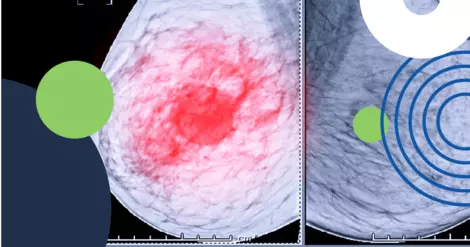
On a mammogram, fatty tissue shows up as black, and dense breast tissue appears white. Because abnormalities also show up in white, reading these images is harder because the radiologist is looking for something white against a white background.
Having dense breasts is not abnormal or dangerous. It just means that you might need an additional imaging or another kind of mammogram to get an effective breast cancer screening. For women with dense breasts, an MRI might be recommended.
Breast size doesn’t determine breast density. Density is not related to how breasts look or feel, or their size. It can only be detected by mammogram or other imaging.
A mammogram can be stressful, especially because it’s considered a test for cancer. However, it is a test to check your breasts and see that everything is well. While it is normal to feel some anxiety about getting the procedure or waiting for your results, it’s very important not to avoid getting a mammogram for these reasons.
Breast cancer is a serious disease that can shorten your life. Early detection of breast cancer increases your treatment options and can help you live longer. According to Cleveland Clinic, most females should start getting mammograms at age 40.
If you’re at a higher risk for breast cancer, you may need earlier screening or more frequent screening. Risk factors for breast cancer include:
Personal or family history of breast cancer or ovarian cancer
Genetic mutations like BRCA1 and BRCA2
Noncancerous breast disease like atypical ductal hyperplasia
Dense breasts
On MyBCTeam, people share their experiences with breast cancer, get advice, and find support from others who understand.
Have you had a mammogram with small breasts? What was it like for you? Let others know in the comments below.
Get updates directly to your inbox.





 Continue with Facebook
Continue with Email
Continue with Facebook
Continue with Email
Continue with Facebook
Continue with Email
Continue with Facebook
Continue with Email
Become a member to get even more





 Join
Join

 Your Privacy Choices

This is a member-feature!
Sign up for free to view article comments.
We'd love to hear from you! Please share your name and email to post and read comments.
You'll also get the latest articles directly to your inbox.