
Powered By



Benign fibroadenomas are solid breast lumps that aren’t cancer. They may shrink or grow over time. Although they’re not cancerous, they are considered a type of tumor.
If you’ve been diagnosed with a fibroadenoma, your first and most pressing question may be “Can this turn into breast cancer?”
Fibroadenomas very rarely contain cancerous tissue and are highly unlikely to become cancerous. Many of them don’t even raise your breast cancer risk. Still, a fibroadenoma can become cancerous, and certain factors can raise your risk by a little bit.
Learning about fibroadenomas and breast cancer risk may help you feel more prepared when talking with your doctor. Here, we cover the risk of fibroadenomas becoming cancerous and how to talk with your breast cancer specialist.
Fibroadenoma is an extremely common breast condition, affecting roughly 10 percent of women in their lifetimes. Fibroadenomas often go away on their own without treatment.
Studies suggest it’s very rare for cancer to be found inside a fibroadenoma. Reported estimates are usually around 0.1 percent to 0.3 percent. That means most fibroadenomas do not turn into cancer.
Also, there’s a difference between cancer growing inside a fibroadenoma (very rare) and a fibroadenoma being a small sign that someone might have a slightly higher breast cancer risk over their lifetime.
The risk isn’t the same for everyone, as certain details of your medical history can put you at a slightly higher risk of having a fibroadenoma turn into breast cancer.
A fibroadenoma may slightly raise breast cancer risk long term. This isn’t the case with all benign breast conditions. With some, such as atypical hyperplasia, breast cancer risk may eventually go back down.
Fibroadenomas rarely turn into breast cancer, but some factors may slightly raise the risk. Your doctor can help you understand your risk and decide whether treatment is needed.
According to City of Hope, a cancer research and treatment center, fibroadenomas are most common in women in their 20s and 30s. Rarely, children under 18 years old can develop a type called juvenile fibroadenoma. The risk of fibroadenomas drops after menopause.
Fibroadenomas found in people over 40 may need closer attention, because breast cancer becomes more common with age. But it’s still uncommon for a fibroadenoma itself to contain cancer.
Complex fibroadenomas are more likely than simple fibroadenomas to become cancerous. Simple fibroadenomas are much more common and typically smaller than complex fibroadenomas. Simple fibroadenomas don’t seem to increase your breast cancer risk by much, if at all.
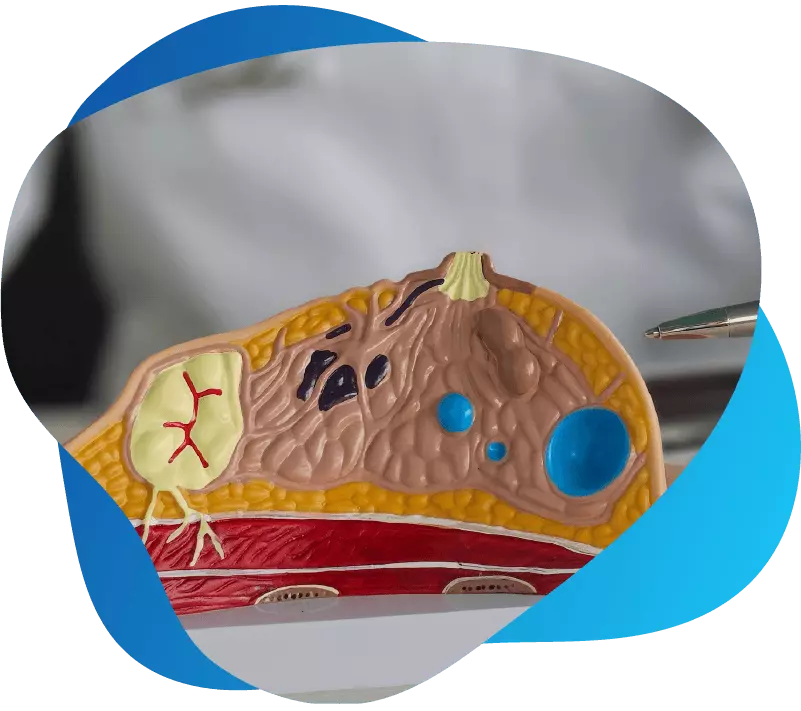 Complex fibroadenomas are typically larger and account for about 15 percent of all fibroadenomas. They mostly develop in women over 35, according to Cleveland Clinic.
Under a microscope, simple fibroadenomas usually look even and regular. Complex fibroadenomas have more noticeable cell changes.
Also, on a mammogram, you may see tissue differences associated with a complex fibroadenoma. These differences can include:
Fibroadenomas and breast cancer share some risk factors. A large-scale study confirmed two key risk factors that increase the risk of breast cancer and fibroadenoma.
Having a family history of breast cancer increases your risk for both breast cancer and benign breast tumors like fibroadenomas. A family history of breast cancer increases the risk of fibroadenoma in all age groups, including after menopause.
If you have breast cancer in your family history, your doctor may recommend more frequent screenings for breast cancer and benign breast conditions.
Fibroadenoma is very common, affecting roughly 10 percent of women in their lifetimes.
Only 0.1 percent to 0.3 percent of fibroadenomas contain cancer.
Fibroadenomas in those over 40 may need closer attention, since breast cancer becomes more common with age.
Interestingly, having a higher education was also found to be a shared risk factor between breast cancer and fibroadenoma. According to JNCI Cancer Spectrum, women with a university education had about 1.5 times the risk of developing fibroadenomas compared with women with an elementary education.
Researchers have a few theories on why this may be. People with a higher education may be more likely to get regular breast screenings, which can find breast growths. Lifestyle factors linked to higher education may also make a difference.
Some studies from BMC Cancer also suggest that women with more education have higher survival rates than women with less education, but more research is needed.
Breast exams and mammograms can help detect both breast cancer and fibroadenomas, but these tests aren’t used by themselves to make a diagnosis.
If your doctor discovers a fibroadenoma during your breast exam or mammogram, the next step may be a breast ultrasound. Fibroadenomas and certain breast tumor types can look very similar on ultrasounds and mammograms, so further testing may be needed.
A breast biopsy can help confirm that a fibroadenoma doesn’t contain cancer cells. If the fibroadenoma is benign, biopsy results may give you peace of mind.
During a breast biopsy or core needle biopsy, your breast specialist removes a piece of tissue the size of a grain of rice from the lump in your breast. They can then examine the tissue closely under a microscope. Your biopsy can tell you if your fibroadenoma is simple or complex, as your doctor will be able to see tissue irregularities like cysts or apocrine changes.
It’s important to work closely with your breast specialist to find out what a breast lump is and whether you should take steps to treat it. Your doctor can also make personalized recommendations on how often you should get your breasts checked.
You should discuss your risk of fibroadenoma and breast cancer with your doctor. No matter your risk, your doctor may encourage you to learn how your breasts usually feel and tell them if you notice any new lumps or changes.
If you have a fibroadenoma, it may or may not need treatment. Your doctor can help you decide the path forward based on your breast cancer risk after fibroadenoma and other factors. Many fibroadenomas shrink or go away on their own without treatment.
If a biopsy shows the lump is a fibroadenoma, your specialist may suggest watching it over time instead of treating it right away. How often you come back depends on your situation, like the lump’s size, whether it’s growing, your symptoms, and what your imaging shows. Some people need a follow-up check, and if everything stays stable, they may go back to regular, age-appropriate breast screening.
If your breast specialist has concerns about your biopsy results, they may recommend surgery to remove the fibroadenoma. You may also have surgery if the fibroadenoma causes pain or discomfort.
In some clinics, there may also be minimally invasive options for certain fibroadenomas. One example is cryoablation, which uses extreme cold to destroy the lump without traditional surgery. Not everyone is a candidate, and availability depends on the clinic.
Contact your doctor sooner if the lump grows quickly, feels different, or becomes painful or if your imaging and biopsy results don’t match clearly.
On MyBCTeam, people share their experiences with breast cancer, get advice, and find support from others who understand.
Which differences have you noticed between fibroadenoma lumps and breast cancer lumps? Let others know in the comments below.
Get updates directly to your inbox.





 Continue with Facebook
Continue with Email
Continue with Facebook
Continue with Email
Continue with Facebook
Continue with Email
Continue with Facebook
Continue with Email
Become a member to get even more





 Join
Join



 Your Privacy Choices

This is a member-feature!
Sign up for free to view article comments.
We'd love to hear from you! Please share your name and email to post and read comments.
You'll also get the latest articles directly to your inbox.