
Powered By



Since having breast cancer surgery, have you noticed pain running down your arm or tightness in your underarm that makes it hard to reach a high shelf? If so, you could be experiencing axillary web syndrome (AWS), also known as cording. Cording is a common side effect of breast cancer surgery.
With proper treatment, symptoms that limit your daily activities often improve. However, some people continue to experience symptoms and may need ongoing follow-up care.
Learn how to relieve the pain and discomfort caused by cording and what may help support your recovery.
AWS often causes pain in the underarm area that can travel down the arm, sometimes reaching the elbow. The pain can also extend down to your hand, including your wrist and thumb, or across the chest.
AWS may make it hard to raise your arm above your shoulder or fully straighten your elbow, limiting your range of motion (how far you can move a joint or body part). You may also feel heaviness, numbness, or tingling in your arm.
“The tightness in my arm starts at my wrist and goes right up under my arm to the armpit where it feels like a thick cord sticking out,” described one member of MyBCTeam.
Another wrote, “Mine felt like a tight strap.”

Apart from sensations of tightness and pain, many people are also able to see AWS. It may appear like a net or web of tissue beneath the skin of your inner arm.
“Yesterday, my armpit felt achy, and it looks like a swollen vein in my armpit,” shared one MyBCTeam member. “Just finished therapy for cording from my armpit to almost my wrist,” said another. “It was tight, and you could see it through my pale skin.”
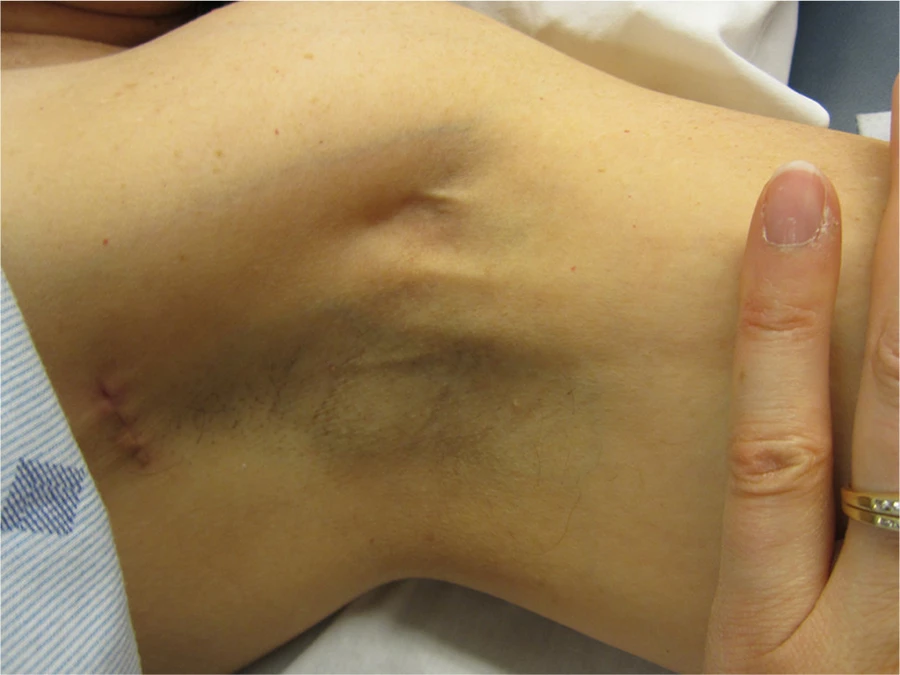
AWS can cause tight, cordlike bands under the skin of the underarm. Here, a thin cord is visible in the axilla, or armpit area, where it may limit arm movement or cause pain when stretching. (CC BY-NC 3.0/Koehler, et al)
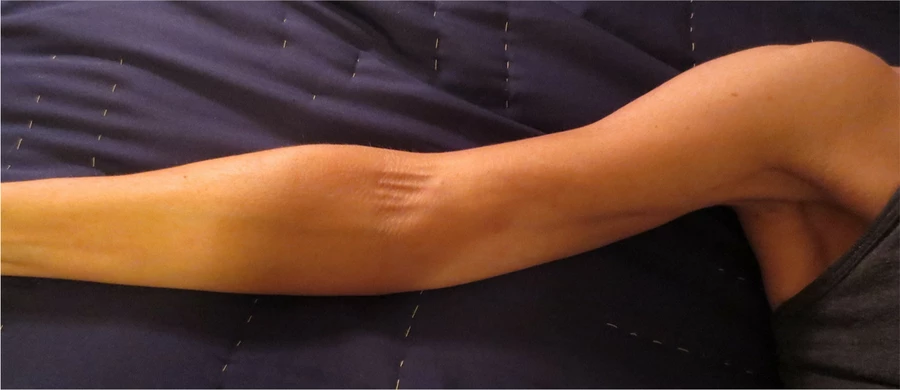
Lymphatic cording is thought to develop due to lymphatic or soft tissue changes in the area under your arm following surgery to remove one or more lymph nodes.
Lymph nodes are small, bean-shaped organs that are part of the immune system and help fight infection. During breast cancer surgery, doctors may remove one or more of the lymph nodes under the arm, called axillary lymph nodes, to check whether cancer has spread.
This side effect usually appears several days to several weeks after breast cancer surgery. In some cases, it can develop years later.
Cording usually happens after lymph node removal in the underarm as part of breast cancer treatment. There are two types of procedures used to remove axillary lymph nodes:
Generally, people who have had an ALND experience cording at a higher rate than those who have had an SLNB. Researchers have reported cording developing in 36 percent to 72 percent of people after ALND and about 11 percent to 58 percent of people after SLNB. Health experts believe this higher rate may be because ALND involves more extensive surgery than SLNB.
Although cording is most commonly seen after lymph node removal, it can also occur after other breast cancer surgeries, such as mastectomy, lumpectomy, and breast reconstruction.
A MyBCTeam member shared, “I had cording on my left side that started about two months after my bilateral mastectomy.”
Another member shared, “With the mastectomy, there was cording of the tendons under my left armpit.”
It’s not clear what causes AWS, but researchers believe that the connective tissues in the axillary area surrounding the lymphatic vessels become inflamed and hardened because of trauma from the surgery. Scar tissue from the axillary surgery is also believed to contribute to the development of AWS.
AWS may increase the chances of later developing lymphedema (buildup of lymph fluid). Lymphedema is another potential side effect of breast cancer surgery that may develop as a result of impaired lymph drainage after lymph node removal.
The main symptom of lymphedema is swelling. It may also cause tightness, tenderness, pain, or discomfort.
Several risk factors have been associated with a higher likelihood of developing cording after breast cancer surgery. AWS is found to occur more frequently in people who:
Remember that these associations don’t necessarily prove any of these factors cause cording. They’re correlations that researchers have noticed but can’t yet fully explain.
It’s important to seek treatment as soon as you notice the symptoms of cording to avoid long-term problems with shoulder and arm movement. Physical therapy (PT), which can improve your mobility and shorten your recovery time, is an important part of treatment.
Many members shared how physical therapy helped them treat AWS. One member said, “I went to PT every week for about six sessions where the therapist worked to massage the cords and stretch them. The process was super painful, but always felt so much better afterward.”
They concluded, “Mine took about three months to fully go away. I would hear little pops periodically when the cords would start to loosen. Very bizarre sound and feeling.”
Another member encouraged other members experiencing AWS to keep on with physical therapy: “I, too, had cording. PT helped, and my friend also did the massaging and stretching the physical therapist recommended. I thought it was there for good.
They continued, “However, I stuck with the stretching and massage and it’s now gone. Took about two to three months. Hang in there.”
If you’re having trouble meeting with a physical therapist, there are several stretching exercises you can do at home to improve your flexibility and mobility. You can find details and illustrations in this resource provided by the Ohio State University Comprehensive Cancer Center.
Apart from physical therapy, you can also consider trying these methods to relax the connective tissues and feel better.
Different types of manual therapy may help treat cording, including:
Your physical therapist may massage and manipulate the cord and the surrounding area to release the adhesions. In some cases, you may hear a “pop” that is followed by relief of the tension and increased range of motion.
Your doctor may suggest taking nonsteroidal anti-inflammatory drugs (NSAIDs), such as ibuprofen or naproxen, to lessen pain, especially after doing exercises or manual therapy. These medicines can help control discomfort and swelling, making it easier for you to participate in therapy and exercises and support your recovery.
Talk with your doctor or pharmacist before taking NSAIDs, as they may interact with some medications and may not be safe for people with certain health conditions.
Your therapist may use low-level laser therapy to treat cording after breast surgery. This therapy may help to break down the hardened scar tissue, reducing pain and improving flexibility in the affected area for a smoother recovery. This therapy is still being studied.
After breast surgery, applying a warm, moist pad to the cords can help ease pain and discomfort.
Heat should be used with caution after breast cancer surgery because prolonged heat may increase lymph production, which can worsen swelling or discomfort.
For some people, swimming can be a great exercise option after breast cancer surgery that can help relieve pain and improve mobility. It’s easy on the body, letting you move gently to improve your range of motion and strength without stressing the healing surgical areas.
Also, the water’s buoyancy gives extra support, making swimming a therapeutic and enjoyable way to help you recover and stay physically well.
However, get clearance from your oncologist or physical therapist before starting any new exercise plan. Make sure you wait until your incisions are healed and the drains have been removed to reduce the risk of infection.
On MyBCTeam, people share experiences with breast cancer, get advice, and find support from others who understand.
Have you experienced cording after breast cancer surgery? Let others know in the comments below.
Get updates directly to your inbox.





 Continue with Facebook
Continue with Email
Continue with Facebook
Continue with Email
Continue with Facebook
Continue with Email
Continue with Facebook
Continue with Email
Become a member to get even more





 Join
Join



 Your Privacy Choices

This is a member-feature!
Sign up for free to view article comments.
I had cording after lumpectomy and lymph node removal it was horrible, no one told me this could happen and I called my doctor in a panic saying there are ropes in my arm and they hurt terribly. She… read more
We'd love to hear from you! Please share your name and email to post and read comments.
You'll also get the latest articles directly to your inbox.